
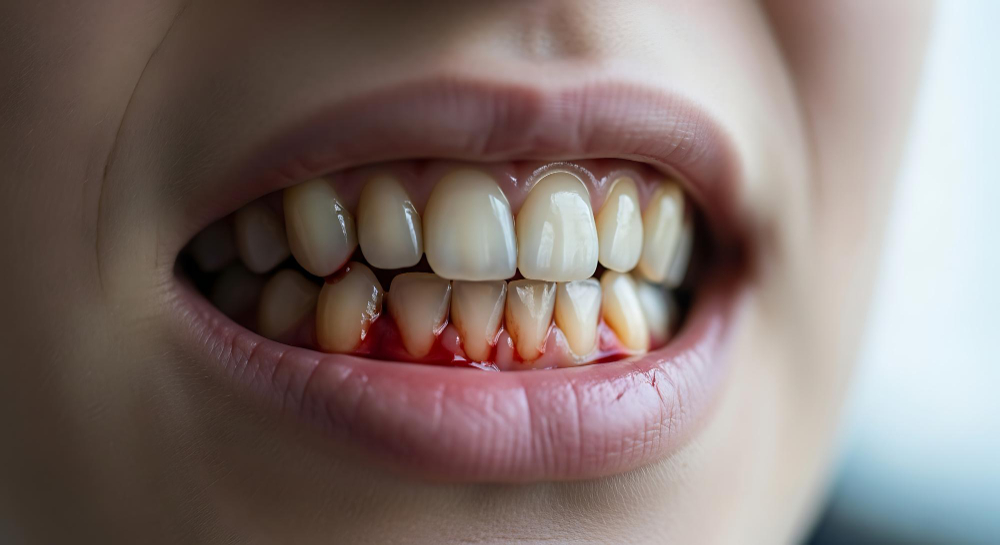
What Are Bleeding Gums?
Bleeding gums are a common dental problem. Many people notice blood when they brush or floss. While this may seem minor, it can signal a bigger issue. In fact, bleeding gums periodontitis risk is something everyone should know about. Healthy gums should not bleed. So, if you see blood, it is important to pay attention. Early care can help prevent more serious problems.
How Bleeding Gums Signal Periodontitis Risk
Bleeding gums can be an early sign of gum disease. Over time, gum disease can lead to periodontitis. Periodontitis is a serious infection that damages the gums and bone. If left untreated, it can cause tooth loss. Therefore, noticing bleeding gums is important. It can help you act before the problem gets worse. According to the CDC, gum disease affects almost half of adults over 30.
Causes of Bleeding Gums
There are several reasons why gums may bleed. Some common causes include:
However, the most common cause is poor oral hygiene. This allows plaque to build up and irritate the gums.
Symptoms to Watch For
Besides bleeding, there are other signs of gum disease. Watch for these symptoms:
For example, if you notice more than one of these signs, you should see a dentist soon.
Diagnosis and When to See a Dentist
Early diagnosis is key to preventing periodontitis. Dentists check your gums for bleeding, swelling, and pockets around the teeth. They may also take X-rays to see if bone loss has started. If you notice bleeding gums, do not wait. Schedule a dental visit right away. Early treatment can stop gum disease from getting worse. The American Dental Association recommends regular checkups every six months.
Treatment Options for Bleeding Gums and Periodontitis
There are several ways to treat bleeding gums and periodontitis. Your dentist may suggest:
With proper care, most people can manage or reverse early gum disease.
Prevention and Oral Health Tips
Preventing periodontitis starts with good oral habits. Here are some oral health tips:
Additionally, drinking water after meals can help wash away food particles.
Frequently Asked Questions
Conclusion and Call-to-Action
In summary, bleeding gums are an important warning sign. They can point to a higher periodontitis risk. Early action and good oral care can protect your teeth and gums. Do not ignore bleeding gums. Consult a dental professional at SRI Dental Clinic for personalized advice on bleeding gums and periodontitis risk.